We have compiled a list of manufacturers, distributors, product information, reference prices, and rankings for Die-casting paint.
ipros is IPROS GMS IPROS One of the largest technical database sites in Japan that collects information on.

Die-casting paint - List of Manufacturers, Suppliers, Companies and Products | IPROS GMS

Die-casting paint Product List

1~15 item / All 15 items

Displayed results

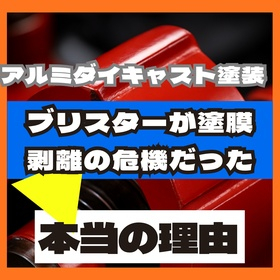
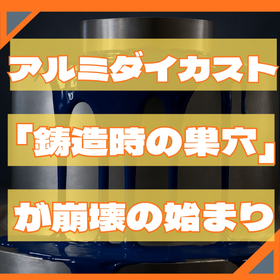
The truth behind the frequent occurrence of pinholes caused by "internal gas expansion."

Occurrence of pinholes due to internal gas in aluminum die casting. Is the baking treatment sufficient?

## The Truth Behind the Frequent Occurrence of Pinholes Caused by "Internal Gas Expansion" in Aluminum Die Casting. Is the Burnout Treatment Sufficient?

  • others
  • Die-casting paint

Added to bookmarks

Bookmarks list

Bookmark has been removed

Bookmarks list

You can't add any more bookmarks

By registering as a member, you can increase the number of bookmarks you can save and organize them with labels.

Free membership registration

The limit of "baking temperature": The true culprit behind the sudden increase in blisters.

The blistering of the aluminum die-cast coating is mainly due to the curing conditions. Did you check the process?

## The Limits of "Baking Temperature": The True Culprit Behind the Sudden Increase in Blisters Blisters in aluminum die-cast coatings are primarily caused by baking conditions. Have you checked the process?

  • others
  • Die-casting paint

Added to bookmarks

Bookmarks list

Bookmark has been removed

Bookmarks list

You can't add any more bookmarks

By registering as a member, you can increase the number of bookmarks you can save and organize them with labels.

Free membership registration

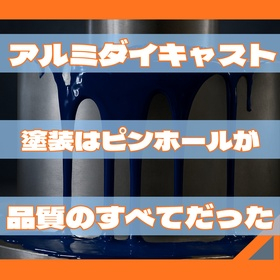
Aluminum die-cast coating was all about pinholes in quality.

The true cause of pinhole formation is not the paint, but insufficient gas release. This explains how it can occur even with heating at 60 degrees.

Pinhole defects are caused by countless tiny holes forming on the surface of the paint film. In automotive parts, this results in appearance defects that can lead to complaints, with cases where delivery delays and re-manufacturing costs increase by an average of 200,000 to 300,000 yen. The importance of the degassing process: Many sites tend to think that "the quality of the paint is low," but in reality, gases remaining in aluminum die-cast or pressed products expand at a curing temperature of 180 degrees and form holes when released from the surface of the paint film. Humidity management is crucial: In environments with humidity over 60 percent, moisture absorbed by the material vaporizes, increasing the pinhole occurrence rate by 40 to 50 percent. By simply heating at 100 degrees for 5 to 10 minutes in the pre-curing process, the occurrence rate can be reduced by 70 percent. The effect of pre-degreasing: By setting the temperature of the degreasing solution to 55 degrees and ensuring a soaking time of 3 to 5 minutes just before painting, the amount of gas inside the material can be reduced by up to 80 percent. Addressing pinholes is not about changing the paint but optimizing pre-treatment and environmental management. Our company optimizes the degassing conditions for each material in small lots, achieving high-quality painting.

  • others
  • Die-casting paint

Added to bookmarks

Bookmarks list

Bookmark has been removed

Bookmarks list

You can't add any more bookmarks

By registering as a member, you can increase the number of bookmarks you can save and organize them with labels.

Free membership registration

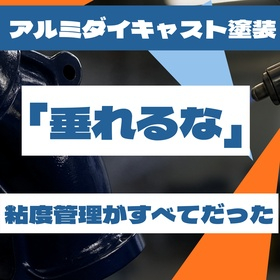
Aluminum die casting coating was all about managing the viscosity of the drips.

The cause of the dripping is the mismatch between paint viscosity and curing temperature. It explains the phenomenon where a 20-degree difference results in a threefold increase in occurrence rate.

Dripping occurs due to poor coating film, which not only leads to appearance defects but also induces poor curing in thick film areas. On average, it accounts for 8-12 percent of all painting defects in the industry. Relationship between viscosity and curing temperature: The lower the paint viscosity and the higher the curing temperature, the more likely dripping occurs. Even with the same viscosity of paint, simply raising the curing temperature from 160 degrees to 180 degrees can increase the dripping occurrence rate from 20 percent to 60 percent. Response to seasonal variations: The viscosity of paint can change by up to 40 percent between winter (5 degrees) and summer (25 degrees). Without proper viscosity management, the defect patterns will vary with each season, making it difficult to identify the causes. Optimal viscosity by material: Aluminum die casting has an optimal viscosity of 20 seconds (Ford cup), zinc die casting 18 seconds, and stainless steel 22 seconds. It is necessary to address the differences in surface tension by material. Our company has implemented daily management using a viscometer and an automatic adjustment system based on material and season, keeping the dripping occurrence rate below 2 percent.

  • others
  • Die-casting paint

Added to bookmarks

Bookmarks list

Bookmark has been removed

Bookmarks list

You can't add any more bookmarks

By registering as a member, you can increase the number of bookmarks you can save and organize them with labels.

Free membership registration

The poor curing of aluminum die-cast coatings was a serious durability issue.

Eighty percent of poor hardening is due to insufficient baking temperature. An explanation of the measured value that hardness decreases by 20 percent with a 10-degree difference.

Poor curing refers to a state where the coating film does not cure sufficiently, resulting in a dent when pressed with a finger. It can crack in a pattern resembling a spider web or peel off due to friction, significantly reducing durability. It accounts for 10-15 percent of all defects on average in the industry. Precision in curing temperature: Raising the curing temperature from 150 degrees to 160 degrees improves hardness (pencil hardness) from H to 2H. Furthermore, increasing it to 170 degrees to 180 degrees can achieve up to 3H. However, a management precision of plus or minus 10 degrees is essential. Measured data on curing time: At 180 degrees, a curing time of 20 minutes reaches a hardness of 2H, 30 minutes reaches 3H, and 60 minutes reaches 4H. The required curing time varies depending on the size and thickness of the parts. Differences in conditions based on resin type: Alkyd resin is sufficient at 160 degrees, but melamine resin requires 180 degrees. Polyester resin is recommended at 190 degrees. Understanding the chemical properties of the resin is essential for setting conditions. Our company has established a curing condition matrix based on part size, material, and resin type, ensuring a stable supply of hardness above 4H. We can also guarantee wear resistance.

  • others
  • Die-casting paint

Added to bookmarks

Bookmarks list

Bookmark has been removed

Bookmarks list

You can't add any more bookmarks

By registering as a member, you can increase the number of bookmarks you can save and organize them with labels.

Free membership registration

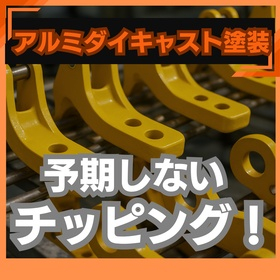
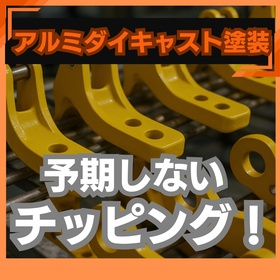
The aluminum die-cast coating had chipping, which was an unexpected defect.

The cause of chipping is poor adhesion and insufficient film thickness. A film thickness of over 40 microns can reduce the occurrence rate by 95 percent.

Chipping is a defect where the coating film chips off due to mechanical impact. It is particularly prone to occur in automotive parts, with cases of customer complaints arising from impacts in the usage environment after delivery accounting for 30-40 percent. Relationship between film thickness and chipping resistance: At a thickness of 20 microns, the film easily peels off under impact (damaged at an impact value of 30J), while at 30 microns, it withstands 60J, and at over 40 microns, it achieves impact resistance of over 150J. Designing the film thickness according to the application of the parts is essential. Quantifying adhesion: In cases of poor adhesion, even at a thickness of 40 microns, the impact value drops to 60J. By optimizing degreasing and chemical treatment to ensure adhesion, the impact resistance can be improved by more than double at the same film thickness. Influence of surface treatment: Maintaining a surface roughness Sa of 2-3 microns strengthens the mechanical interlocking with the coating film, improving chipping resistance by 30 percent. Optimizing shot blasting conditions is key. Our company combines film thickness management (40 plus or minus 5 microns), ensuring adhesion, and proper surface treatment to achieve a chipping occurrence rate of less than 0.5 percent. This has also been adopted in automotive parts.

  • others
  • Die-casting paint

Added to bookmarks

Bookmarks list

Bookmark has been removed

Bookmarks list

You can't add any more bookmarks

By registering as a member, you can increase the number of bookmarks you can save and organize them with labels.

Free membership registration

Mikawa Painting Case: Aluminum Die Casting

Complex coatings for all materials! With Mikawa Star, various plating and coating treatments are possible!

Mikawa Star utilizes its high painting technology, extensive painting knowledge, superior quality, and years of experience to fully meet all needs, from resin and metal painting to special processing, for both large and small items. Since all processes from pre-painting to post-painting are carried out consistently within the same facility, there are fewer costs and damages associated with transportation, and we can rigorously check quality and processes down to the finest details. "Can't find a contractor who can paint special materials..." "Struggling with the need to paint large products..." If you are in such a situation, please contact Mikawa Star first! ★★Introducing Mikawa Star's painting examples★★ ■Example: Aluminum die casting (please see the photo at the top left of this page!) ■Point: We achieved surface treatment of difficult uneven surfaces with Mikawa Star's technology. *For more details, please contact us or download the catalog.

  • Surface treatment contract service
  • Die-casting paint

Added to bookmarks

Bookmarks list

Bookmark has been removed

Bookmarks list

You can't add any more bookmarks

By registering as a member, you can increase the number of bookmarks you can save and organize them with labels.

Free membership registration

Die-casting coating service

We offer a wide range of specifications including solvent spray painting, electrodeposition painting, and powder coating!

Our company is capable of handling painting for products with high aesthetic requirements as well as small lot items, and we perform versatile solvent spray painting. We offer a wide range of coatings for metal parts, including acrylic baked coatings with excellent weather resistance, the most common melamine baked coatings for indoor use, polyester baked coatings with superior chemical resistance and adhesion, and two-component urethane coatings. We also provide painting services for plastic items. Please feel free to contact us if you have any requests. 【Target Products】 ■ Motorcycle parts ■ Air conditioning products for construction ■ Medical device parts ■ Video camera equipment parts ■ Architectural exterior parts *For more details, please download the PDF or contact us.

  • Processing Contract
  • Surface treatment contract service
  • Die-casting paint

Added to bookmarks

Bookmarks list

Bookmark has been removed

Bookmarks list

You can't add any more bookmarks

By registering as a member, you can increase the number of bookmarks you can save and organize them with labels.

Free membership registration

Uncontrollable "drying conditions": Risk of uneven gloss occurrence

The uneven gloss of aluminum die-cast coating is mainly caused by the drying temperature. Have you fundamentally improved the drying process?

## Uncontrollable "Drying Conditions": The Risk of Gloss Unevenness Gloss unevenness in aluminum die-cast painting is primarily caused by drying temperature. Have you fundamentally improved the drying process?

  • others
  • Die-casting paint

Added to bookmarks

Bookmarks list

Bookmark has been removed

Bookmarks list

You can't add any more bookmarks

By registering as a member, you can increase the number of bookmarks you can save and organize them with labels.

Free membership registration

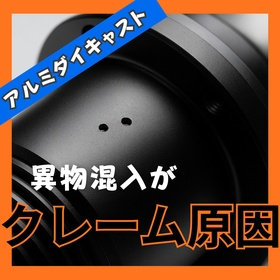
The aluminum die-cast coating was all about poor adhesion.

Poor adhesion cannot be solved by paint alone. Multiple processes such as pretreatment, degreasing, and gas release are involved.

One of the most common defects in aluminum die-cast painting is poor adhesion. When peeling or lifting of the paint film occurs, it is easy to suspect the paint or painting method; however, the actual cause often lies in the processes prior to painting. Particularly overlooked is the pretreatment. Aluminum die-cast parts tend to retain release agents and cutting oils, and if painting is done without sufficient degreasing, adhesion will decrease. Additionally, the oxide film on the surface can hinder paint adhesion. Furthermore, in processes with baking temperatures around 180°C, internal gases can expand, leading to blisters or pinholes. Environments with humidity over 60% and insufficient gas venting also increase the incidence of defects. In practice, there are cases where attempts are made to resolve issues by changing the paint, but this alone does not lead to fundamental improvements. It is important to review the entire process, including chemical treatment and gas venting. Poor adhesion is not an isolated defect; it is closely related to pinholes, blisters, and paint peeling. Understanding the entire process is the first step toward improving quality. We have prepared materials summarizing measures and improvement cases for poor adhesion in aluminum die-cast painting. If you are considering quality improvement, please make use of them.

  • others
  • Die-casting paint

Added to bookmarks

Bookmarks list

Bookmark has been removed

Bookmarks list

You can't add any more bookmarks

By registering as a member, you can increase the number of bookmarks you can save and organize them with labels.

Free membership registration

Aluminum die-cast coating was at risk of blistering and paint delamination.

The cause of blisters is the volatilization and gasification of oils. The simultaneous removal of moisture and oils from the material is the key point for countermeasures.

Blistering is a defect where the paint film swells during the cooling stage after baking, creating cavities between the paint film and the substrate. Once it occurs, the paint film peels off due to temperature changes in the usage environment, resulting in a high complaint rate after delivery, second only to paint peeling (industry average: 15-20 percent). The risk of double gasification: At a baking temperature of around 150 degrees, residual oil vaporizes, and moisture absorbed by the substrate turns into steam. When these two gases are generated simultaneously, pressure increases under the paint film, and there is data showing that the blistering rate can reach 85 percent. Optimal temperature for degreasing solution: Keeping the degreasing solution above 50 degrees improves oil removal efficiency by 60 percent. Additionally, moisture after chemical treatment can be removed by 95 percent with heating and drying at 80 degrees for 3 minutes. Response to stainless steel materials: Stainless steel absorbs more moisture on its surface than aluminum (1.5 times more), making it incompatible with conventional conditions. It is essential to set pre-treatment conditions specific to each material. Our company has established optimal degreasing and drying conditions for each material, achieving zero blistering.

  • others
  • Die-casting paint

Added to bookmarks

Bookmarks list

Bookmark has been removed

Bookmarks list

You can't add any more bookmarks

By registering as a member, you can increase the number of bookmarks you can save and organize them with labels.

Free membership registration

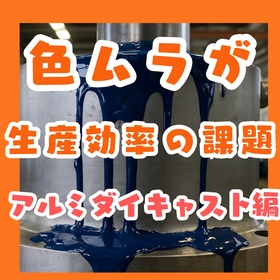
Aluminum die-cast painting had issues with color unevenness affecting production efficiency.

The cause of color unevenness is the variation in film thickness. By managing within plus or minus 30 microns, it is possible to reduce it by 90 percent.

Color variation is the difference in light refraction caused by varying film thickness in different areas. Even with the same color number, if there is variation in film thickness, the color may appear different, leading to a rejection rate of about 35 percent in visual inspections. The numerical target for film thickness management: managing the thickness within plus or minus 20 microns reduces the occurrence of color variation to below 5 percent. If the current management is within plus or minus 50 microns, simply improving to plus or minus 30 microns will reduce color variation by 60 percent. Optimization of spray distance and pressure: By maintaining the spray distance at 20 cm and the pressure within plus or minus 10 percent of 3.0 kg/cm², film thickness variation can be controlled to plus or minus 25 microns. The introduction of automatic spraying equipment improves film thickness accuracy by eight times compared to manual work. The impact of drying speed: If drying is too fast, solvents evaporate unevenly, resulting in thicker areas of the film. Ensuring an appropriate drying time (30 minutes at 25 degrees) achieves a 70 percent prevention rate for color variation. With our automatic spraying system and film thickness management, we achieve zero occurrences of color variation, enabling both quality improvement and production efficiency.

  • others
  • Die-casting paint

Added to bookmarks

Bookmarks list

Bookmark has been removed

Bookmarks list

You can't add any more bookmarks

By registering as a member, you can increase the number of bookmarks you can save and organize them with labels.

Free membership registration

Aluminum die-cast coating peeling was the sole cause of quality degradation.

The cause of paint peeling is poor adhesion. By simultaneously optimizing degreasing and chemical treatment, the occurrence rate can be reduced by 99 percent.

Paint peeling is a defect where the paint film lifts from the material and gradually comes off during use. This not only reduces the appearance quality but also affects the entire manufacturing site, as the peeled paint film can adhere to other products. Importance of the degreasing process: Insufficient degreasing is the main cause of paint peeling. By maintaining the degreasing solution temperature above 50 degrees, the oil removal efficiency improves by 60 percent. Regularly replacing the degreasing solution (every 7 days) can keep the degreasing efficiency consistently above 95 percent. Optimization of chemical treatment: By managing the chemical treatment film thickness within plus or minus 1 micron and maintaining a thickness of 8-10 microns, adhesion is maximized. Keeping the crystal diameter between 5-15 microns enhances long-term adhesion. Impact of humidity management: If the humidity just before painting is above 70 percent, moisture adheres to the material surface, leading to poor adhesion. It is essential to ensure a drying time of one hour before painting and to manage humidity below 50 percent. Our company optimizes degreasing, chemical treatment, and drying, achieving a 10-year warranty against paint peeling. We also guarantee quality even for small lot short delivery requests.

  • others
  • Die-casting paint

Added to bookmarks

Bookmarks list

Bookmark has been removed

Bookmarks list

You can't add any more bookmarks

By registering as a member, you can increase the number of bookmarks you can save and organize them with labels.

Free membership registration

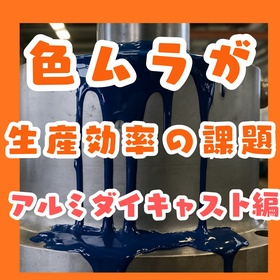
Aluminum die-cast painting had issues with color unevenness affecting production efficiency.

The cause of color unevenness is the variation in film thickness. Managing it within plus or minus 30 microns can reduce it by 90 percent.

Color unevenness is the difference in light refraction caused by variations in the thickness of the paint film in different areas. Even with the same color number, if there is a variation in film thickness, the color may appear different, leading to a rejection rate of about 35 percent in visual inspections. The numerical target for film thickness management: managing the thickness within plus or minus 20 microns reduces the occurrence of color unevenness to below 5 percent. If the current management is within plus or minus 50 microns, simply improving to plus or minus 30 microns will reduce color unevenness by 60 percent. Optimization of spray distance and pressure: By maintaining the spray distance at 20 cm and the pressure within plus or minus 10 percent of 3.0 kg/cm², the variation in film thickness can be suppressed to plus or minus 25 microns. The introduction of automatic spray equipment improves film thickness accuracy by eight times compared to manual work. The impact of drying speed: If drying is too fast, solvents evaporate unevenly, resulting in areas with thicker film. Ensuring an appropriate drying time (30 minutes at 25 degrees) achieves a 70 percent prevention rate for color unevenness. With our automatic spray system and film thickness management, we achieve zero occurrences of color unevenness, enabling both quality improvement and production efficiency.

  • others
  • Die-casting paint

Added to bookmarks

Bookmarks list

Bookmark has been removed

Bookmarks list

You can't add any more bookmarks

By registering as a member, you can increase the number of bookmarks you can save and organize them with labels.

Free membership registration

Aluminum die-cast painting was all about pinholes in quality.

The true cause of pinhole formation is not the paint, but insufficient gas release. This explains how it can occur even with heating at 60 degrees.

Pinhole defects are tiny holes that form in countless numbers on the surface of the paint film. In automotive parts, they are considered aesthetic defects and can lead to complaints, with cases where delivery delays and re-manufacturing costs increase by an average of 200,000 to 300,000 yen. The importance of the degassing process: Many sites tend to think that "the quality of the paint is low," but in reality, gases remaining in aluminum die-cast or pressed parts expand at a curing temperature of 180 degrees and form holes when released from the surface of the paint film. Humidity management is crucial: In environments with humidity above 60 percent, moisture absorbed by the material vaporizes, increasing the pinhole occurrence rate by 40 to 50 percent. By simply heating to 100 degrees for 5 to 10 minutes in the pre-curing process, the occurrence rate can be reduced by 70 percent. The effect of pre-degreasing: By setting the temperature of the degreasing solution to 55 degrees just before painting and ensuring a soaking time of 3 to 5 minutes, the amount of gas inside the material can be reduced by up to 80 percent. Addressing pinholes is not about changing the paint but optimizing pre-treatment and environmental management. Our company optimizes the degassing conditions for each material in small lots, achieving high-quality painting.

  • others
  • Die-casting paint

Added to bookmarks

Bookmarks list

Bookmark has been removed

Bookmarks list

You can't add any more bookmarks

By registering as a member, you can increase the number of bookmarks you can save and organize them with labels.

Free membership registration